
— The Real Gap Compared to IFUNGOO Electric Thrusters
In recent years, a new type of product has started to appear on the market: the so-called “dual-purpose” electric fin. It can be mounted on a surfboard as a fin, but also used as a handheld underwater scooter. On paper, it sounds like a smart, flexible solution—and many overseas customers have been asking about it.
At first glance, the idea is appealing. One device, two use cases. You can ride on the surface or explore underwater, all with a single product. It feels efficient, even innovative.
But once you look deeper into real-world usage and product design, a more practical reality emerges:
this kind of “two-in-one” solution is not an upgrade—it’s a compromise.
The first limitation shows up in power.
Because the device needs to be small and light enough for handheld use, both motor size and battery capacity are restricted. As a result, thrust is limited and acceleration is relatively weak. In calm water, it may perform acceptably, but once you get into real conditions—wind, small waves, or currents—it struggles to deliver consistent propulsion. This is not just theory; it’s something we’ve repeatedly confirmed during development testing.
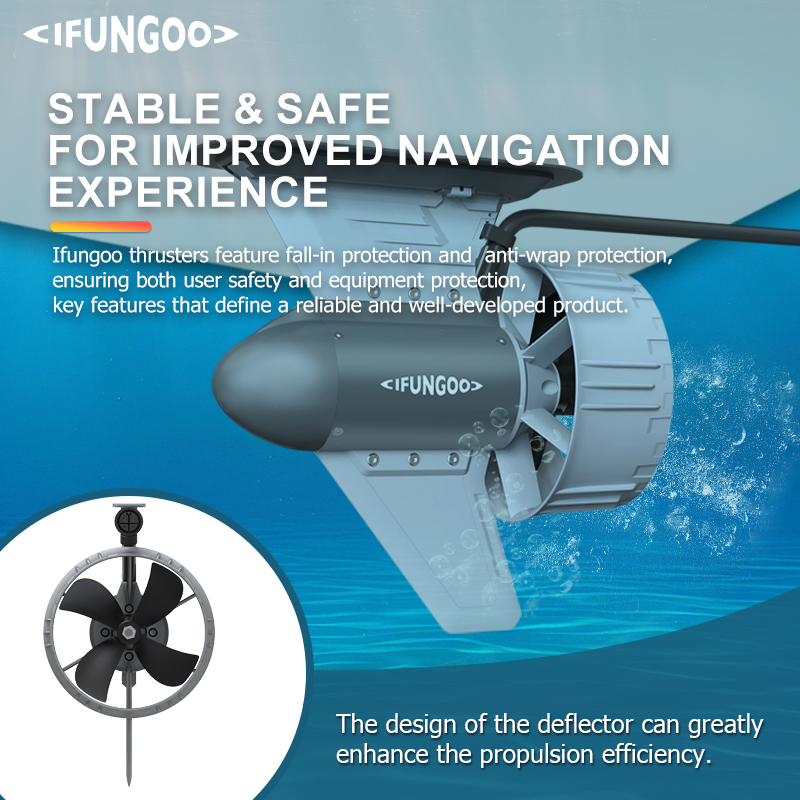
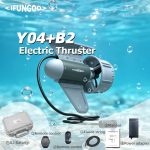
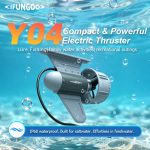
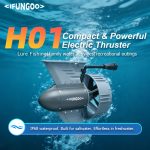
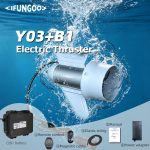
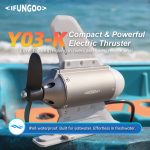
IFUNGOO took a different path from the beginning. Instead of trying to do everything, it focuses purely on board-mounted propulsion. Without the constraints of handheld use, it can deliver higher power output, stronger thrust, and more consistent performance. The difference in experience is clear: it’s not just assisting your movement—it’s actually driving you forward.
Another often overlooked issue is hydrodynamic efficiency.
A traditional fin is designed for stability and direction control, not propulsion. When you try to integrate a motor into that shape, the form factor becomes heavily restricted. It’s difficult to achieve an optimal streamlined design, which leads to increased drag and lower efficiency. The result is a system that consumes energy quickly but doesn’t translate that into effective speed.
IFUNGOO, on the other hand, is designed from the ground up for propulsion. Its shape follows hydrodynamic principles, reducing drag and improving energy conversion efficiency. In simple terms, more of the battery power goes into moving you forward, instead of being lost to resistance.
Installation and stability present another challenge.
Dual-purpose products usually rely on “universal mounting systems” to fit different boards. While that sounds convenient, it often comes at the cost of stability. The connection may not be perfectly secure, and at higher speeds, vibration can become noticeable, affecting control and overall user confidence—especially for beginners or family users.
IFUNGOO approaches this differently by using dedicated mounting structures. Instead of trying to fit everything, it focuses on doing one job well. The result is a more secure installation and a more stable, predictable riding experience, even in less-than-ideal water conditions.
Battery performance follows the same pattern.
To remain lightweight and portable, dual-purpose devices typically use smaller batteries. This limits runtime and can also affect output consistency. In real use, this often translates into shorter sessions and more frequent charging interruptions.
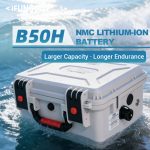
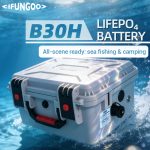
IFUNGOO leans more toward a performance-oriented design philosophy. With larger battery capacity and optimized power management, it delivers longer runtime and more stable output throughout the session. The experience is not only longer, but also more consistent from start to finish.
At its core, the issue with dual-purpose electric fins is quite simple.
They attempt to serve two fundamentally different scenarios: underwater propulsion and surface board propulsion. But these two use cases have very different requirements in terms of power, structure, and control.
In the end, the product becomes a compromise.
It works underwater, but not professionally.
It can push a board, but not powerfully.
It tries to do everything, but doesn’t truly excel at anything.
That’s why IFUNGOO didn’t rush into the “two-in-one” trend. Instead, it made a deliberate choice to focus on one thing: building a true surface electric thruster.
And that focus leads to real advantages—stronger thrust, higher efficiency, better stability, and longer endurance. These aren’t just technical improvements; they translate directly into a smoother, more reliable experience on the water.
A dual-purpose solution might be fine for occasional fun.
But if you’re looking for real performance, consistency, and dependable power, a dedicated electric thruster is still the more rational choice.
And that is exactly the direction IFUNGOO continues to pursue.
Leave a Reply